

How To Write A Letter To A New Pen Pal


The Power of the Pen When it Comes to Pen Pals
I’ve been writing letters as long as I can remember.
When I was eight or nine, I had a pen pal in Manitoba, Canada. I can picture myself looking at a map in my encyclopedia and thinking that it was VERY far away from my hometown in Ohio and also that it must be a very exotic place. I kept the small school photo of my pen pal on my desk, which was a white secretary desk with lots of spaces for treasures like this picture of a stranger who I got to know over several years. She and I lost touch around the time that we became teenagers, but I still think of her now and then and wonder about her life up north.
In the summer of 1989, I traveled to the Soviet Union as part of an exchange. This was at the time when the US and the USSR were embroiled in the cold war. There is so much to say about this trip, but one of my most prominent memories is of the letters I received from my counterparts before we left on this trip of a lifetime, the letters I wrote home from the city of Kazan and the letters that my tour mates and I wrote to each other for many years after our return to our own lives and places. This adventure took place just before email was invented and I am so grateful that it hadn’t been, because trips to the mailbox were magical and getting to know these people who are so dear to me thirty plus years later through words on paper is irreplaceable.
Most recently, receiving letters from my nephews while at summer camp has been the highlight of my summers and as of this year I have started to write to an inmate as part of a rehabilitation program focused on compassion.
All of this is to say that being and having pen pals holds great meaning to me. I was excited to be asked to write about it to offer some ideas about having pen pals and being one , but also to leave space to hear about your own mail tales, too.
If you’ve read some of my other entries, you know that I am not currently the best pen pal. I’ve found myself in a rut over the past couple of years. I often wonder why. I love stationery, I love the people who I receive mail from and the mail itself. I have an enviable collection of uncancelled postage stamps and I love to write. As I was thinking about this article, I started to think that getting back to the basics might be the answer. That maybe I had been putting too much pressure on myself to create mail art, write lengthy letters or respond very quickly. Much like the other writing I do, what is ultimately most important is the words. Arranged by your head and your heart in just the right way they can be so powerful, especially the kind ones.
So, I am going to break down some ideas for sending mail and then try to follow my own advice.
Jump to:
What Is a Pen Pal?
A pen pal is someone you build a friendship with through written letters, usually somebody you have never met and often somebody living in another country. The exchange is the whole relationship. You write, they write back, and over months or years you come to know each other through paper alone.
A pen pal letter is simply the letter itself: a personal, handwritten note sent through the mail to that person. It has no fixed length and no required format. A short note counts. A twelve-page outpouring counts.
The term is usually written as two words, "pen pal", in American English, and "pen friend" or "penfriend" is the older British equivalent. "Penpal" as one word is common online and nobody will correct you.
What separates a pen pal from a texting friend is the delay. A letter takes days or weeks to arrive. That gap changes how you write. You cannot fire off a one-line reply, so you tend to say more, and you tend to mean it.
How to Write a Pen Pal Letter
There is no official format, but a first letter to a stranger goes more easily with a shape to follow. This one works.
- Date it. Top right or top left, your choice. Your pen pal may reread this letter in five years and the date will matter to them.
- Open with a greeting and their name. "Dear Anna" is perfectly good. "Hi Anna" is fine too if you want something lighter.
- Say why you are writing. One or two sentences. How you found them, or what made you want a pen pal. This orients a stranger immediately.
- Introduce yourself. Name, roughly where you live, what fills your days. Enough for them to picture you, not a resume.
- Give them something specific. One story, one detail, one thing that happened this week. Specifics are what people write back to.
- Ask two or three questions. This is the part people skip, and it is the part that guarantees a reply.
- Close and sign off. A line about looking forward to hearing from them, then your name.
Write on one side of the paper if your ink shows through. Number your pages if there is more than one. Put your return address on the envelope, or inside the letter if you would rather it not sit on the outside.
On handwriting: legible beats beautiful. Nobody is grading you. If your handwriting is genuinely hard to read, slow down rather than switching to a screen.
How to Start a Pen Pal Letter
The blank first line stops more letters than anything else. You do not need a clever opening. You need any opening.
Openers that work with a stranger:
- "Dear Anna, I found your profile on Global Penfriends and your description of your garden made me want to write."
- "Hello from a rainy Tuesday in Minneapolis. My name is Sam and this is my first letter to you."
- "Dear Anna, I have wanted a pen pal since I was nine years old and never got around to it, so here I am at forty-three, finally writing."
- "Hi Anna, I am terrible at introductions, so I am going to start in the middle and tell you about my dog."
Openers for a reply, which are easier because they have already given you material:
- "Your letter arrived on the exact day I needed it."
- "I have been thinking about what you said about your grandmother ever since I read it."
- "Thank you for the postcard of the harbor. It is on my desk now."
Notice that every one of these is concrete. Something specific about them, about you, or about the moment you are writing. That is the whole trick.
What to Write About in a Pen Pal Letter
When people say they do not know what to write, what they usually mean is that their life feels too ordinary to describe. It is not. The ordinary is exactly what a stranger on the other side of the world finds interesting.
Things to write about:
- What you can see out of the window right now
- What you ate today, and whether it was any good
- The weather, honestly, because it is genuinely different where they are
- Something small that annoyed you this week
- A book, movie or album you have not been able to stop thinking about
- Your work, and the parts of it nobody outside it would guess
- A local tradition or festival that you take for granted
- A photograph you are enclosing, and the story behind it
- What you were like as a child
- Something you are learning badly and slowly
- A place near you that you would take them if they visited
Questions worth asking:
- What does a completely ordinary day look like for you?
- What is the last thing that made you laugh out loud?
- What is something about your country that outsiders always get wrong?
- What did you want to be when you were ten?
- Is there a word in your language that has no good English equivalent?
- What is on your walls?
- What would you do with a completely free Saturday?
Two or three questions per letter is plenty. A dozen reads like an interrogation and puts the other person to work.
What to hold back in early letters: your home address if you are writing through a matching service and would rather use a P.O. box, financial details, and anything you would not want a stranger to have. Warmth and caution are not in conflict.
How to End a Pen Pal Letter
Close with a sentence that hands the conversation back, then sign off.
Closing lines: "I hope this finds you well and I would love to hear how the garden turns out." Or "No pressure to reply quickly, I know life gets busy." Or "Write when you can. I will be here."
Sign-offs, from formal to warm: Sincerely, Best wishes, All the best, Warmly, Yours, Until next time, With love, Your friend across the water.
Match the sign-off to how well you know them. "Sincerely" for a first letter to a stranger is safe. By the fifth letter you will have found your own.
A Sample First Letter to a Pen Pal
Here is what the structure above looks like assembled. Steal the shape, not the content.
March 14
Dear Anna,
I found your profile through Global Penfriends, and the line about you keeping bees is what made me stop scrolling. I have wanted a pen pal since I was a child and have finally run out of excuses.
My name is Sam. I am thirty-eight and live outside Portland, Oregon, in a house with a plum tree that produces far more plums than two people can reasonably use. I work as a cartographer, which sounds more romantic than it is, though I do get to name things occasionally. I live with my partner and a very opinionated cat named Biscuit.
The sun came out yesterday for the first time since February. The whole street came outside to stand in it. I am not exaggerating. There were about fifteen of us on the sidewalk squinting at each other like we had just been let out of somewhere.
I would love to know what an ordinary day looks like for you, whether the bees are as much work as they sound, and what the weather is doing where you are.
No rush on a reply. I know how these things go.
Warmly,
Sam
That is around 210 words. It took ten minutes to write and it gives Anna four separate things she could respond to.
How Long Should a First Pen Pal Letter Be?
One page is plenty. Two is generous. There is no minimum.
The instinct with a first letter is to prove yourself, and the result is often three pages of biography that leaves the other person unsure where to start. A short, specific letter with a couple of questions in it is far more likely to get a reply than a long, thorough one.
Length settles itself after a few exchanges. Some pen pals send index cards. Others send twelve pages. Both are correct.
Who said it best?

If you don't have the words yourself, there are others who may have already said it for you.
Quotes are a wonderful way to share what you're feeling and are easy to find. Type a few keywords about what you are feeling into your favorite browser and endless possibilities will pop up. In the same vein, greeting cards are also a great way to express yourself, and there are so many wonderful independent card makers to support. Greeting cards also help you avoid the curse of the blank piece of paper. They give you a starting point and eliminate writing from scratch.
Make it special for your pen pal and yourself.
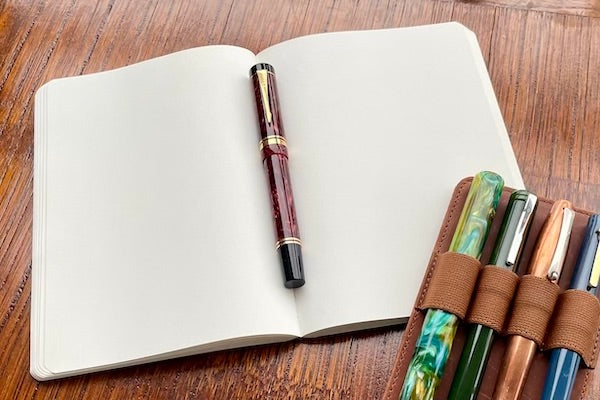
Break out your favorite fountain pen, get out your good stationery and cards, light a candle and make a cup of tea or coffee. Cocktails are great too. Making your environment feel special will translate to your letters.
Keep it simple or spill all the tea.

There is no wrong or right way to be a pen pal. Some pen pals send each other short notes, and some send novella length correspondence. Some write frequently and others go months between letters. Just like other kinds of relationships, each one is unique and has its own cadence to follow. When writing to a stranger, the first few letters might feel a little awkward. Start simple and don't be afraid to set expectations.
Make an appointment for your pen pal.

Setting aside a specific time to write letters makes a big difference. Just as you slot your to do list and appointments into your calendar, do the same with your pen pals. If you know you are going to be writing to a specific person at a specific time, it helps you get present with your thoughts about them and what you'd like them to know.
A kind word from a stranger can make a huge difference.

If you need a pen pal there are a lot of great resources and a lot of people who would be thrilled to receive your letters. It is a gift of your heart to send a letter.
Writing a Pen Pal Letter to a Child
Writing to a child, whether a nephew at camp, a student in a classroom exchange or a matched pen pal, works differently.
Keep it short. Half a page is a good length for a young child, a full page for a confident reader. Long letters feel like homework.
Ask questions they can answer easily. "What is the best thing you have eaten this week?" gets a better reply than "How are you finding school?"
Give them something to hold. A sticker, a pressed leaf, a drawing, a postcard of where you live. Children reply to objects more reliably than to prose.
Write clearly and leave space. Wide margins and generous line spacing make a letter feel approachable rather than dense.
If the exchange is through a school or an organized program, follow their child safety rules exactly. Reputable programs route letters through the organization rather than sharing home addresses, and there is a good reason for that. Never arrange direct contact with a child you have been matched with outside the program's own channels.
Writing to Someone in Prison
This is the correspondence I started most recently, and it is the one where the practical details matter most.
Check the facility's mail rules before you write anything. They vary enormously between countries, states and individual institutions, and they change. Many facilities now scan incoming mail rather than delivering the original, some ban stickers, glitter, crayon, colored paper, polaroids and anything with adhesive, and some restrict the number of pages. A letter that breaks the rules is not returned to you, it is simply destroyed.
Address it exactly as the facility specifies, which usually means the person's full committed name and identification number followed by the facility's mailing address.
Use a P.O. box for your return address if you are not comfortable sharing your home. This is standard practice and nobody will think it strange.
Keep the first letter modest. A page is enough. Introduce yourself, explain how you came to be writing, and ask one or two open questions. There is no need to reference the reason for their incarceration, and asking about it in a first letter is generally not welcome.
Be honest about what you can commit to. Someone inside will look forward to your letters far more than you expect. Promising monthly letters and delivering two a year is worse than saying up front that you write when you can.
Going through an established organization gives you guidance and a degree of protection on both sides, which is why I would recommend it over writing cold.
What to Write With and On
None of this is required. All of it makes the practice more pleasurable, which is the real reason people keep it up.
The pen. A fountain pen slows your hand down, which suits letter writing. If you are writing several pages in a sitting, a lighter pen and a medium or fine nib will save your hand. A gel pen or a good ballpoint is perfectly respectable.
The ink. Color is half the personality of a handwritten letter. If you are sending mail overseas or to a facility that scans it, stick to a dark, water-resistant ink so it survives the journey and reproduces cleanly.
The paper. Thin airmail paper keeps international postage down and folds neatly. Thicker paper feels better but bleeds more with wet nibs, so test the combination before you commit to eight pages.
Somewhere to keep the letters you receive. This one is underrated. A box, a folder, a notebook to tuck them into. Thirty years on, the letters from that trip to Kazan are the only reason I can still hear those people's voices.
Where to Find a Pen Pal
Two kinds of options here: charitable programs where your letter goes to someone who needs one, and matching services where you find a long-term correspondent.
Programs That Need Letter Writers
Postcrossing
A global postcard exchange running since 2005, now with more than 805,000 members across over 200 countries who have exchanged over 85 million postcards. You request an address, send a card, and receive one back from a random member elsewhere in the world. Free to join, and the lowest-commitment way to start.
More Love Letters
https://www.moreloveletters.com/
Recipients are nominated by a friend, co-worker or family member because they are grieving, ill, celebrating something, or simply having a hard year. Five or six new stories go up each month. You read them, write to the ones that move you, and send your letter to the listed address, where it joins a bundle of hundreds from around the world.
Peaceful Pen Pal Project, Kids for Peace
https://kidsforpeaceglobal.org/peacefulpenpals/
A free global program connecting children through handwritten letters, founded in 2020. Children are matched by age and location, usually within a couple of weeks of registering. A good way to get kids writing letters young, and multilingual children are welcomed specifically.
Compassion Prison Project Letter Writing Campaign
https://compassionprisonproject.org/services/letter-writing-campaign/
CPP works to create trauma-informed prisons and communities. Their letter writing campaign guides volunteers through sending mail into prisons, either as a one-time letter or as an ongoing correspondence, with the practical detail that makes the difference between a letter arriving and a letter being destroyed.
Retirement Communities
Reach out to your local retirement communities and nursing homes. Many run pen pal programs for residents who have few visitors, and they will usually be delighted to hear from you.
Matching Services for a Long-Term Pen Pal
Global Penfriends
https://www.globalpenfriends.com/
Members correspond by mail or through the site's own messaging. You write a profile describing yourself and what you are looking for, then search for a match. All ages from school age upward, and specifically set up for snail mail rather than just chat.
Slowly
An app that recreates the delay of postal mail. You are matched on shared interests and language, and letters take longer to arrive the further away your pen pal lives. Not paper, but the pacing produces the same kind of writing, and several people I know have moved from Slowly to actual mail once they found someone they clicked with.
InterPals
Running since 1998 and free, with a large international membership and a strong language-exchange element. Because it is open and free, you will do more filtering of your own inbox than on the smaller services.
Mail Art Inspiration
Instagram is filled with accounts making beautiful mail art. For pointers on turning your envelope into a work of art, search #mailart or #mailartist.
Be Your Own Pen Pal
Do you have things you need to get out of your system, or that you want to tell yourself?
Use paper and pen to do it. This can be letters to yourself in a notebook or journal, or on stationery to be tucked away and read later. There are plenty of Galen Everyday Books, leather notebooks and notebook covers that make this practice feel special and luxurious. There is also nothing to say you can't mail it to yourself. Write a letter, address it to yourself, and have someone else send it to you when you think you'll most need it. Notes to yourself are a good way to show care and compassion.
I hope this encourages everyone who reads it to send a card or a letter. I am going to revisit the letters I have received and not yet answered and do the same. I would love to hear who you wrote to, whether you have other resources for finding pen pals, and any tips of your own. Leave them in the comments.
FAQs About Pen Pals and Letter Writing
- +What is a pen pal letter?
- A pen pal letter is a personal, usually handwritten letter sent through the mail to someone you correspond with regularly, often a stranger in another country. There is no required format or length. What distinguishes it from a message is the delay between writing and receiving a reply, which tends to make people write more thoughtfully and at greater length than they would digitally.
- +What should I write in my first pen pal letter?
- Say how you found them and why you wanted a pen pal, introduce yourself briefly, share one specific thing that happened to you recently, and ask two or three questions they can answer easily. One page is plenty. The specific detail is what earns a reply, so a story about the sun finally coming out after a month of rain will do more work than a paragraph summarizing your career.
- +How long should a pen pal letter be?
- One page for a first letter, and whatever feels right after that. There is no minimum and no expectation. Some pen pals exchange index cards, others send a dozen pages at a time. A short, specific letter with questions in it gets replies more reliably than a long, exhaustive one, because it gives the other person an obvious place to start.
- +How do I end a pen pal letter?
- Close with one line that hands the conversation back, something like "write when you can, no rush", then sign off. Sincerely and Best wishes suit a first letter to a stranger. Warmly, Yours and Until next time work once you know each other. With love is for pen pals who have become friends. Match the sign-off to the stage of the friendship and it will sort itself out.
- +Where can I find a pen pal?
- For charitable letter writing, try Postcrossing, More Love Letters, the Peaceful Pen Pal Project through Kids for Peace, or the Compassion Prison Project's letter writing campaign. For a long-term correspondent, Global Penfriends and InterPals both match members for postal letters, and Slowly does the same in app form. Local retirement communities and nursing homes are also worth contacting directly.
- +How do you become a good pen pal?
- Consistency matters more than eloquence. Reply within a reasonable window, be honest up front about how often you can realistically write, and ask questions rather than only reporting on yourself. You do not need to make mail art or fill six pages. Showing up with sincerity, at whatever pace you can actually sustain, is the whole job.
- +Can I be a pen pal to myself?
- Yes. Writing to yourself is a way to reflect and to practice a bit of self-kindness. Use a journal, or write on stationery and seal it to open later. You can also address a letter to yourself and ask someone else to mail it at a point in the future when you will most need it.

1 Response

franciene lehmann
i have taken to keeping postcards and small notecards and stamps in my purse with my bullet journal. i think of friends far away often during my days. i make it a point to write them so. sometimes it’s only 2-3 sentences but it lets them know i’m thinking of them – likely relative to a shared experience. if i’m in a meeting or something and can’t do it immediately i write myself a reminder and do it as soon after as possible. it takes less than five minutes. i usually get responses by phone, email, or my own snail mail. i send out 3-4 each week
Leave a comment
Comments will be approved before showing up.
Also in Blog


Journaling Writing Prompts: 18 Inspiring Ideas to Unlock Your Mind
Inspiration will come calling eventually – but sometimes you just need to put your writing away and visit it at another time.
One of the best ways to get the creative juices flowing is to start with one of these handy writing prompts. Use these journal prompts to help inspire your daily practice...


Katy Klassman
Author